Can You Get Pregnant on Your Period?

Medically reviewed by
Dr Clair GraingerLast reviewed: 16 Dec 2025
There are many myths you may have heard about pregnancy, like you cannot get pregnant the first time you have sex or if you’re breastfeeding. You may have even heard that you cannot get pregnant on your period, but none of these are entirely true.
Although the chances of getting pregnant on your period are much less, it is still possible. Here, we explain why you can still get pregnant at this time of the month and what you can do to stay protected.

Can you get pregnant while on your period?
Yes, you can get pregnant while on your period. Although it is less likely to happen at this time, it’s not impossible. The reason for this is that sperm can live inside the body for up to 5 to 7 days.
So, if you have unprotected sex towards the end of your period, there could be sperm cells that are still alive at the time when your ovaries release an egg (ovulation) – when a woman is most fertile.
What increases the chances of getting pregnant during your period?
Several factors can increase the chances of getting pregnant on your period, including:
Short menstrual cycles
The average menstrual cycle, that is, the time between the first day of one period to the start of the next, is around 28 days, with ovulation happening around day 14. If you have a shorter cycle than this, it is possible to ovulate a few days after your period ends, meaning sperm from sex during your period could fertilise an egg.
Irregular periods
If your menstrual cycles are irregular, it can be more difficult to predict when your ovaries will release an egg, which makes it more difficult to avoid pregnancy during your period.
Mistaking spotting for a period
Spotting between periods is common and can be mistaken for a period. If it is, and you have unprotected sex, there is a chance you could get pregnant, especially if the unusual bleeding happens as your ovaries are releasing an egg.
If you have new spotting between periods, speak to your doctor as it’s important to find out why this is happening.
Early ovulation
As a guide, ovulation usually occurs mid-cycle. So if your cycle lasts 28 days, it should happen around day 14. However, ovulation is not always predictable, with some research suggesting that as many as 70% of women are in their fertile window outside of days 10 to 17 of their cycle. Some ovulate earlier and others later.
That means that even if your cycle fits within the average timings, you could ovulate earlier than you expected, meaning if you have unprotected sex during your period, you could get pregnant.
How the menstrual cycle affects fertility
Understanding the different phases of the menstrual cycle can give you a better idea of when you are likely to be most fertile. It is a hormone-driven and complex process that prepares the body for pregnancy.
On average, the menstrual cycle lasts between 21 and 35 days and is split into 4 distinct phases:
| Phase | When | What happens? |
|---|---|---|
| Menstrual | Days 1 to 5 | When your womb lining sheds, and a period occurs. |
| Follicular | Days 1 to 13 | A follicle (fluid-filled sac) in the ovary matures, meaning the egg is ready to be released from the sac, so the womb lining prepares for pregnancy. |
| Ovulation | Day 14 | An ovary releases an egg for fertilisation. |
| Luteal phase | Days 15 to 28 | The body prepares for pregnancy or the next period if an egg is not fertilised. |
Women are most likely to get pregnant in the 5 days leading up to ovulation and the day of ovulation. This is known as her fertile window. The most fertile days during this time are the day of ovulation and the day before. However, because sperm can survive for up to 5 to 7 days, having sex in the 5 to 7 days leading up to the release of an egg increases the chances of conceiving.
Tracking fertile days
Menstrual tracking apps are on the rise, with the top 3 being downloaded more than 200 million times. They help you predict your most fertile days by tracking your cycle and increasing the chance of getting pregnant.
Fertility tracking apps work by collecting and analysing the data a user inputs, such as period start and finish dates, cycle length, and symptoms, to predict their fertile window and ovulation.
Some people also use them as a type of contraception, but there are risks associated with this. One review found that 50% of women who reported contraception failure used a mobile app and fertility window tracking alone, meaning it may not be the most effective method for preventing pregnancy.
Though if used perfectly, only 1 in 100 women will accidentally fall pregnant. This includes using more advanced methods of fertility awareness that measure multiple signs of fertility, such as body temperature and cervical mucus tracking.
Using contraception during period sex
Even if you are on your period, using contraception is the most effective way to avoid getting pregnant. Although the chances of getting pregnant on your period are low, they are not zero, especially if you have a shorter cycle or ovulate soon after your period ends.
Contraception helps prevent pregnancy and, in some cases, can protect against sexually transmitted infections (STIs). There are several types to choose from, including hormonal and non-hormonal types, depending on your needs, lifestyle, and preferences.
Hormonal contraception

Hormonal contraception contains artificial hormones to stop pregnancy from happening. They can be combined, which means they contain a mix of synthetic oestrogen and progesterone, or they can be progesterone-only and contain no oestrogen.
Hormonal contraception can work in several ways. It can:
- Stop ovulation from happening.
- Thicken the cervical mucus to stop sperm reaching an egg.
- Thin the lining of the womb, so a fertilised egg is unable to implant and grow.
Some of the most common methods of hormonal contraception and their effectiveness according to the NHS are:
| Type | Effectiveness | |
|---|---|---|
| Typical use | Perfect use | |
| Combined pill | 91% | Over 99% |
| Progesterone-only or mini pill | 91% | Over 99% |
| Contraceptive patch | 91% | Over 99% |
| Vaginal ring | 91% | Over 99% |
| Contraceptive implant | Over 99% | Over 99% |
| Contraceptive injection | 94% | Over 99% |
| Intrauterine system (IUS) or “the coil” | Over 99% | Over 99% |
Non-hormonal contraception
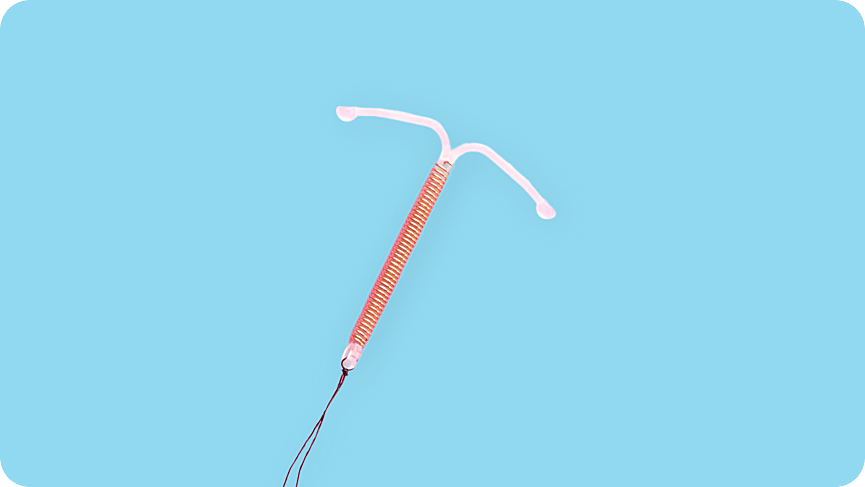
Non-hormonal methods do not use hormones to stop you getting pregnant. Instead, they can include barrier methods that stop sperm from entering the womb, copper intrauterine devices (IUD), or fertility awareness methods, such as:
- diaphragm and caps – inserted inside the vagina to cover the cervix, to stop sperm entering the womb, and could be 92 to 96% effective with perfect use
- the copper IUD – a small T-shaped device that’s inserted into the womb by a doctor or nurse, which releases copper, a substance that is toxic to sperm, and is more than 99% effective
- the natural method – relies on tracking the woman’s fertility cycle, through an app, tracking temperature, or cervical mucus, but is less reliable and 76% effective when typically used
Barrier methods for preventing pregnancy and STIs

The only type of contraception that protects against both pregnancy and STIs is condoms. When used correctly, they are 98% effective at stopping pregnancy.
Condoms work by creating a physical barrier between sexual partners to stop the exchange of bodily fluids and sperm during sex. However, if a condom breaks, it can mean there is a chance that you could be pregnant or could catch an STI.
When to see a doctor

You should contact a doctor if you have had unprotected sex at any time during your cycle, you are getting irregular vaginal bleeding, or have unexpected pregnancy symptoms, as there is a chance you could be pregnant. If you have any unexpected bleeding or pelvic pain and a positive pregnancy test, see a doctor straight away.
Some common early signs of pregnancy include:
- a missed or lighter period than usual
- feeling or being sick, known as morning sickness, but it can occur at any time of the day or night
- tiredness
- sore breasts
- peeing more often
- constipation
- vaginal discharge
- strange tastes, smells, and cravings
If you are getting any of these, you should take a pregnancy test and speak to your doctor.
When is the best time to get pregnant?
The best time to get pregnant is during your fertile window, which is the 5 days leading up to ovulation and your ovulation day. This is when a mature egg is released from the ovaries, and you are most fertile. The NHS recommends having unprotected sex every 2 to 3 days to increase your chances of conceiving.
If you have unprotected sex 2 days before ovulation, the chances of getting pregnant are 26%, but this drops to 1% the day after ovulation.
How to increase your chances of getting pregnant
There are several things you can do to increase your chances of getting pregnant, such as:


If you are struggling to become pregnant, speak to your doctor for advice.
In summary
Pregnancy during periods is uncommon but possible, especially if you have irregular periods, short menstrual cycles, or ovulate earlier than you expected. Understanding your cycle to get a better idea of when your fertile window is and using contraception lowers the chance of pregnancy.
If you have had unprotected sex, you can request the morning after pill from Superdrug Online Doctor and benefit from fast, next-day delivery. Alternatively, using our contraceptive pill service, you can find a suitable method of hormonal contraception, such as the combined pill, mini pill, contraceptive patch, or vaginal ring, to suit your lifestyle.
FAQs
Can I get pregnant on the first day of my period?
It is very unlikely to get pregnant on the first day of your period, but not impossible. Sperm can survive for up to 5 to 7 days, and for people who have very short menstrual cycles, ovulation can happen soon after your period ends. In cases like these, the sperm may fertilise an egg released by the ovaries.
Is it safe to have sex while on period?
Yes, it is safe to have sex on your period, but you are still at risk of pregnancy. So if you do not want to get pregnant, you will need to use contraception. You should also consider using condoms to protect you and your partner from sexually transmitted infections. Some people find that having sex during their period can manage some of their symptoms, like migraines or period cramps.
How many days after your period can you get pregnant?
You can be at risk of getting pregnant before your period ends. While it’s less likely, you can still get pregnant by having sex before your period ends.
It becomes more likely you will get pregnant from a few days after your period ends, especially if you have short menstrual cycles. That’s because your fertile window may start soon after your period ends. If you have sex towards the end of your period and your fertile window starts a few days later, you may get pregnant.
Am I protected against STIs if I have sex on my period?
No, having sex on your period will not protect you from STIs. The only way to protect you and your partner is to use a condom every time you have sex.
Am I most fertile when I’m on my period?
No, you are most fertile around the time of ovulation, which usually occurs mid-cycle. For example, if you have a 28-day-long menstrual cycle, ovulation is likely to happen around day 14. For most people, ovulation occurs 10 to 16 days before their next period. Your fertile window is the time in your cycle when pregnancy is most likely to happen. It includes the 5 days leading up to ovulation and ovulation day itself.
Still, even though you are less fertile on your period, you can still get pregnant if you have sex before it ends.
Can sperm survive in period blood?
Yes, sperm can survive in period blood, but they may not survive for long, as the vaginal environment during your period is not ideal for their survival. This makes the chance of pregnancy low, but not impossible.
Can you be pregnant and get your period?
No, you should not have a normal, regular period when pregnant because the womb lining does not shed like it usually does during menstruation. However, you may notice light bleeding in early pregnancy that may be mistaken for a period, but is actually implantation bleeding and is a sign that a fertilised egg has attached to the womb lining.
Any bleeding in pregnancy should be discussed straight away with your doctor.
Sources
- How well contraception works at preventing pregnancy, NHS [accessed 07 November 2025]
- Periods and fertility in the menstrual cycle, NHS [accessed 07 November 2025]
- Signs and symptoms of pregnancy, NHS [accessed 07 November 2025]
- The timing of the “fertile window” in the menstrual cycle: day specific estimates from a prospective study, British Medical Journal [accessed 07 November 2025]
- The Use and Efficacy of Mobile Fertility-tracking Applications as a Method of Contraception: a Survey, Current Obstetrics and Gynecology Reports [accessed 07 November 2025]
- Trying to get pregnant, NHS [accessed 07 November 2025]
- “UPDATE: I’m pregnant!”: Inferring global downloads and reasons for using menstrual tracking apps, Sage Journals [accessed 07 November 2025]
- When in the month are women and men most fertile?, British Fertility Society [accessed 07 November 2025]