Retatrutide: The New Triple-Agonist Weight Loss Treatment

Medically reviewed by
Dr Clair GraingerLast reviewed: 11 Aug 2026
Retatrutide is the latest weight loss medication that’s currently in phase 3 clinical trials. It contains the active ingredient, retatrutide, and is being developed by the same manufacturer as Mounjaro, Eli Lilly, for the management of obesity and type 2 diabetes. Retatrutide is a triple agonist, targeting the receptors of 3 hormones that can impact appetite, weight, and blood sugar levels, earning it the nicknames the “triple-G” and the “Godzilla” of weight loss jabs.
Retatrutide is not yet available in the UK and has not been approved for use by any regulatory bodies – it is still undergoing clinical trials to assess its safety and effectiveness.
In this guide, you can find out more about how retatrutide works, what the latest research says, the potential side effects, and how it compares to other popular weight loss injections, such as Mounjaro and Wegovy.
How retatrutide works for weight loss
Retatrutide is a triple agonist that targets the receptors of 3 hormones, mimicking their effects to improve blood sugar levels and promote weight loss. The 3 hormones are:



By mimicking the effects of these hormones, retatrutide helps you lose weight by suppressing your appetite, slowing digestion, and helping your body break down fat more effectively. Because of this, retatrutide is thought to be more effective than Wegovy, which only binds to GLP-1 receptors, and Mounjaro, which is a dual agonist that mimics the effects of GLP-1 and GIP.
Clinical trials and results
Retatrutide is currently in phase 3 clinical trials for weight loss, but results from phase 2 trials are promising. At the highest weekly 12mg dose, participants lost an average of 24.2% of their starting body weight over 48 weeks. Within this group, 26% of people also lost at least 30% of their initial body weight.
A lower 4mg weekly dose also resulted in impressive weight loss results, with an average loss of 17% over 48 weeks and:
- 92% of participants lost at least 5% of their starting body weight
- 75% lost at least 10% of their body weight
- 60% lost at least 15% of their starting weight
Retatrutide vs Weight Loss Injections
Retatrutide vs Mounjaro
In clinical trials, the active ingredient in Mounjaro, tirzepatide, results in an average weight loss of 22.5% at the highest 15mg per week dose over 72 weeks. Unlike retatrutide, tirzepatide only binds to 2 hormone receptors, GLP-1 and GIP, and is available with a prescription for weight management and type 2 diabetes.
Retatrutide vs Wegovy injections
Wegovy is a once-weekly weight loss injection that contains the active ingredient semaglutide, a GLP-1 receptor agonist that slows digestion, suppresses appetite, and regulates blood sugar levels. At the maximum maintenance dose of 7.2mg per week, Wegovy can help you lose on average 21% of your initial body weight over 72 weeks. It has been approved for weight loss in the UK, whereas retatrutide has not and is still in phase 3 clinical trials. Although retatrutide is also a weekly injection, it targets 3 hormone receptors, GLP-1, GIP, and glucagon, and phase 3 trials have shown it can result in an average weight loss of 28.7% over 68 weeks.
Retatrutide vs Weight Loss Tablets
Retatrutide vs Wegovy pill vs Foundayo
The Wegovy pill is a daily oral tablet that works like the Wegovy injection to help you lose weight. However, it must be taken on an empty stomach, usually first thing in the morning, and at least 30 minutes before eating, drinking, or taking any other oral medications. Clinical trials show that at the highest 25mg dose, the average weight loss with the Wegovy pill over 64 weeks was 16.6% compared to 2.7% with placebo.
Foundayo is a daily GLP-1 oral tablet that works to help you lose weight by suppressing your appetite by making you feel fuller for longer. It is a small-molecule GLP-1 which means that the way it is absorbed is not affected by what you eat or drink, so you can take it without any fasting, food or drink restrictions. Clinical trials show that on the 17.2mg dose, patients lost an average 12.4% of their starting weight over 72 weeks compared to 0.9% placebo.
Retatrutide, on the other hand, is a once-weekly triple agonist that mimics 3 distinct natural hormones to suppress your appetite, slow digestion, and regulate blood sugar levels. Phase 3 clinical trials also show that it has the potential to be more effective for weight loss, with study participants losing an average of 28.7% of their starting body weight after 68 weeks. However, retatrutide has not been approved for weight loss in the UK, unlike the Wegovy pill and Foundayo.
Retatrutide dosage
In phase 2 clinical trials, retatrutide was given in the following doses:
- 1mg, 2mg or 4mg (starting dose)
- 1mg, 4mg, 8mg or 12mg per week (maintenance dose)
- 12mg per week (maximum dose)
The dose escalation was similar to other weight loss medications, with the retatrutide dose increasing every 4 weeks.
However, there is no ‘official’ retatrutide dosage schedule yet because it’s still being researched for its effects on weight loss. Like other weight loss injections, retatrutide was started at a low dose and gradually increased over several weeks, to allow the body to get used to the medication and minimise the chance of side effects.
If retatrutide is approved for weight loss, the dosage schedule will be confirmed, and it will only be available with a prescription. You will also need to meet specific criteria before a doctor will approve it for you.
Is retatrutide an injection?
Yes, retatrutide will be available as a once-weekly self-injectable medication, similar to other weight loss injections. Although the official dosage schedule is not yet known, it will likely start at a low dose and increase gradually until you reach the maximum maintenance dose. This will help the body get used to the active ingredient and lower the chance of side effects.
Side effects of retatrutide
Retatrutide side effects are similar to Wegovy and Mounjaro, with mild to moderate gastrointestinal side effects most commonly reported. They include:
- feeling or being sick
- diarrhoea
- constipation
These side effects are more likely to occur when the treatment first starts or when the dose increases. Most are likely to be managed easily at home by:
- eating smaller, more frequent meals
- avoiding spicy, greasy, or fatty meals
- eating plain, bland foods, like toast and crackers
- drinking frequent sips of water to prevent dehydration
- getting rest until you feel better
- drinking peppermint or ginger tea if you feel sick
7% of trial participants also reported changes in skin sensation, such as tingling or sensitivity, but these were not severe and did not cause anyone to stop the treatment.
The long-term safety data for retatrutide is currently limited, but a full list of side effects will be made available once the medication has completed testing and been approved. A list of known possible side effects will always be available in the patient information leaflet.
Difference between retatrutide and tirzepatide
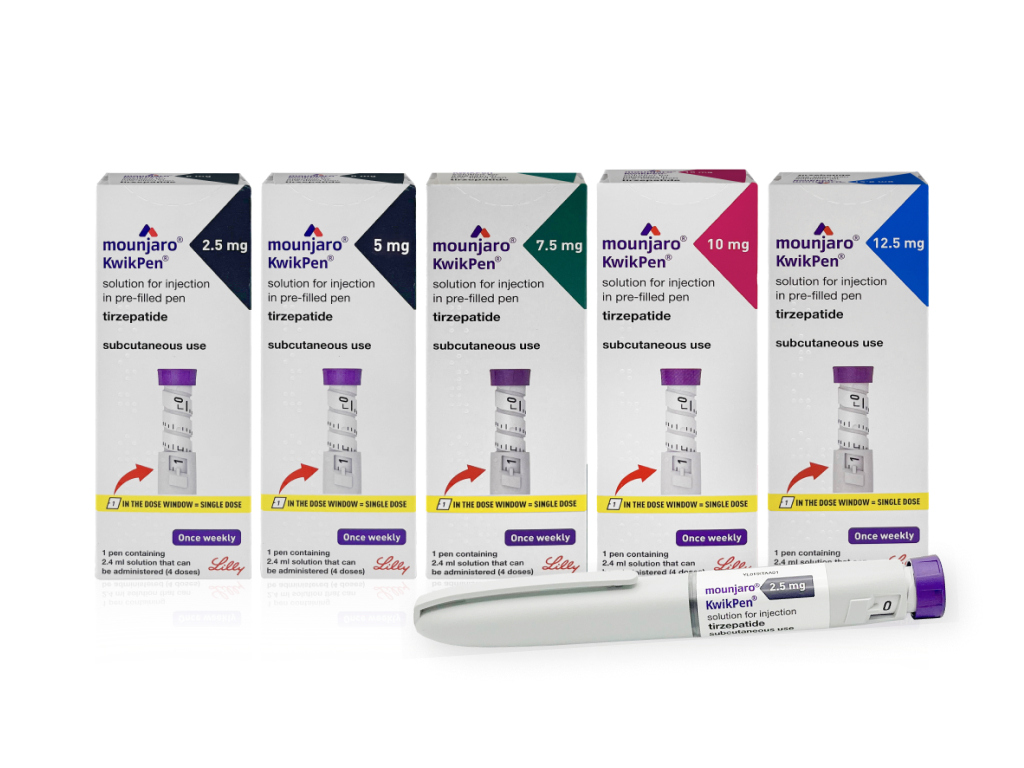
Mounjaro is an approved medication for weight loss and type 2 diabetes in the UK, while retatrutide is still in development and currently going through phase 3 clinical trials. Mounjaro attaches to the receptors of 2 digestive hormones, while retatrutide also attaches to these and glucagon receptors, which could mean it has a stronger effect on weight loss.
|

|
|
|---|---|---|
| Mounjaro | Retatrutide | |
| Active ingredient | Tirzepatide | Retatrutide |
| How it works | A dual agonist that targets GLP-1 and GIP receptors to reduce hunger, slow digestion, and regulate blood sugar levels | A triple agonist that mimics GLP-1, GIP, and glucagon to reduce hunger, improve fat metabolism, slow digestion, regulate blood sugar levels, and increase the amount of fat burned for energy |
| Manufacturer | Eli Lilly | Eli Lilly |
| Available in the UK? | Yes, with a valid prescription for weight loss and type 2 diabetes | No, still going through phase 3 clinical trials |
| Doses | From 2.5 to 15mg | From 1 to 12mg |
| Common side effects | Feeling or being sick, diarrhoea, constipation, reduced appetite | Feeling or being sick, diarrhoea, constipation, reduced appetite |
Retatrutide availability and expected cost
Retatrutide is not yet available in the UK and is unlikely to be approved before 2027. It is still going through phase 3 clinical trials, which are assessing the safety and effectiveness of retatrutide for weight loss. These are due to finish in May 2026.
After the trial results are published, the Medicines and Healthcare products Regulatory Agency (MHRA) will need to review the drug's safety and effectiveness data. This will then be used to decide whether it will be approved for weight loss in the UK.
If retatrutide is approved, it will likely be available privately first from online doctor services, like Superdrug Online Doctor, who offer weight loss services. It may take longer to become available on the NHS because the NHS has its own regulations that a medication must meet before it is approved.
How much will retatrutide cost?
The expected cost of retatrutide is not yet known, but it is likely to be similar to other weight loss injections. The closest medication currently available on the market to compare is Mounjaro. Mounjaro prices start from around £195.00 a month for the lowest dose, and around £370.00 for the highest dose, depending on the service provider and any offers they may have on at the time of ordering.
Once retatrutide has been approved in the UK, the price will be confirmed.
Is retatrutide available on the black market?
Yes, there are reports of black market versions of retatrutide being available that may be sold through online social media channels and websites falsely labelling it as “for research purposes only”. However, getting retatrutide through these sources is illegal and highly dangerous.
The unauthorised products may be counterfeit and contain unknown, toxic, and potentially dangerous ingredients.
No retatrutide medications or products have been approved for use in the UK, so it is best to assume that any current products are illegal and potentially dangerous. You can report any suspected counterfeit or unregulated medications to the MHRA’s Yellow Card Scheme.
Sources
- MHRA smashes major illicit weight loss medicine production facility in record seizure, MHRA [accessed 29 October 2025]
- Mounjaro KwikPen 2.5mg solution for injection in pre-filled pen, emc [accessed 29 October 2025]
- Once-Weekly Semaglutide in Adults with Overweight or Obesity, The New England Journal of Medicine (NEJM) [accessed 29 October 2025]
- Tirzepatide Once Weekly for the Treatment of Obesity, NEJM [accessed 29 October 2025]
- Triple–Hormone-Receptor Agonist Retatrutide for Obesity — A Phase 2 Trial, NEJM[accessed 29 October 2025]
- Lilly's triple agonist, retatrutide, delivered weight loss of up to an average of 71.2 lbs along with substantial relief from osteoarthritis pain in first successful Phase 3 trial, Lilly [accessed 06 August 2026]
- Oral Semaglutide at a Dose of 25 mg in Adults with Overweight or Obesity, The New England Journal of Medicine [accessed 28 July 2026]
- Orforglipron, an Oral Small-Molecule GLP-1 Receptor Agonist for Obesity Treatment, The New England Journal of Medicine [accessed 12 August 2026]
- Foundayo 17.2mg, emc [accessed 11 August 2026]
Patient Reviews
Related Weight Loss Treatments
Further Reading on Weight Loss
- Do Appetite Suppressants Work?
- BMI Calculator
- Ozempic For Weight Loss
- Weight Loss FAQs
- Weight Loss Injections
- Rybelsus For Weight Loss
- Victoza For Weight Loss
- Semaglutide For Weight Loss
- Comparing Weight Loss Pills
- Comparing Weight Loss Injections
- Weight Loss Injections on the NHS
- Ozempic Face
- How to Switch from Wegovy to Mounjaro
- Tirzepatide vs Semaglutide vs Liraglutide
- Calorie Deficit Calculator
- Weight Loss Plateau: Why It Happens and 8 Ways to Break Through
- Why Am I Not Losing Weight?
- How to Switch from Mounjaro to Wegovy
- Orforglipron: The Oral GLP-1 Pill for Weight Loss
- GLP-1 Patches: Do They Work For Weight Loss?
- The Sugar Spotlight: Looking at Britain's Sweet Tooth
- GLP-1 Medications for Weight Loss
- How to Tighten Loose Skin After Weight Loss
- How GLP-1 Medications Can Help with PCOS
- BMR Calculator
- Semaglutide Tablets
- TDEE Calculator
- Protein Calculator for Weight Loss
- Berberine for Weight Loss