
Sugar is everywhere in British diets.
Obesity is on the rise in the UK with 64.5% of adults in England estimated to be overweight or obese, the prevalence of which has been on an upwards trend since at least 2015-2016. In light of this, we set out to explore the nation’s relationship with sugar, helping people access accurate information and better understand their cravings.
To dig into our sugar-eating habits, we’ve conducted a survey of 2,000 Britons from across the country, both men and women. We’ve looked into how much sugar people are eating, when cravings tend to spike and some popular myths and beliefs about sugary foods.
Our report aims to raise awareness around sugar consumption, from hidden sugars in everyday foods to the impact eating too much can have on your health, from your mental wellbeing to your weight. We’ve also got some expert commentary to explain why we crave sugar so much and give some advice on how to be mindful about your consumption.
When and why do we crave sugar?
Before we can reframe our relationship with sugar, we need to look at when sugar cravings strike, and who they impact most, to get an understanding of what’s going on and how we can start to change patterns.
According to our survey, most people tend to seek out a sweet treat after a meal or before bed, with 1 in 5 saying they’re more likely to crave sugar late at night or after dinner. That’s compared to 1 in 7 who reach for sugar after a stressful workday and 1 in 10 who crave sugary snacks after exercising. Our survey also found that women report higher cravings for sugar than men.
Late-night cravings could be due to a range of biological reasons, like hormonal changes in the evening or just your taste buds wanting something new after a savoury meal. Lifestyle factors like stress or tiredness can also contribute to sugar cravings as your body looks for a quick energy boost. Boredom is another common reason behind cravings, with 47% of Brits admitting to snacking on sugar when they’re bored.
One more factor that can lead to cravings is seeing food content on TV or social media, contributing to ‘food noise’, aka persistent thoughts about food, even when you’re not hungry. Gen-Z seems to be the group that feels the impact of this most, with 51% saying they struggle to block out this noise. Plus, those aged 16-24 are the most likely to consume over the daily recommended sugar intake of 30g, eating 39.56g a day on average. 1 in 3 Gen Zs also believe they are addicted to sugar and agree that they are the least likely to give it up if a doctor asked them to.
But why is this age group so dependent on sugar? Dr Babak Ashrafi has a theory:
Gen Z’s higher sugar addiction isn’t just about having a sweet tooth — it’s the result of a perfect storm. Today’s food environment is saturated with cheap, ultra-processed snacks and drinks designed to be irresistible, while constant exposure on social media and delivery apps makes them harder to avoid. Add to that the fact that younger brains are more sensitive to the “reward” hit sugar gives, and with rising stress and poor sleep driving comfort eating, it’s no surprise Gen Z are consuming more sugar than any generation before them.

Where in the UK consumes the most sugar?
To explore how sugar habits vary across the country, we analysed regional consumption to see which areas are exceeding daily recommendations and struggling most with cravings.

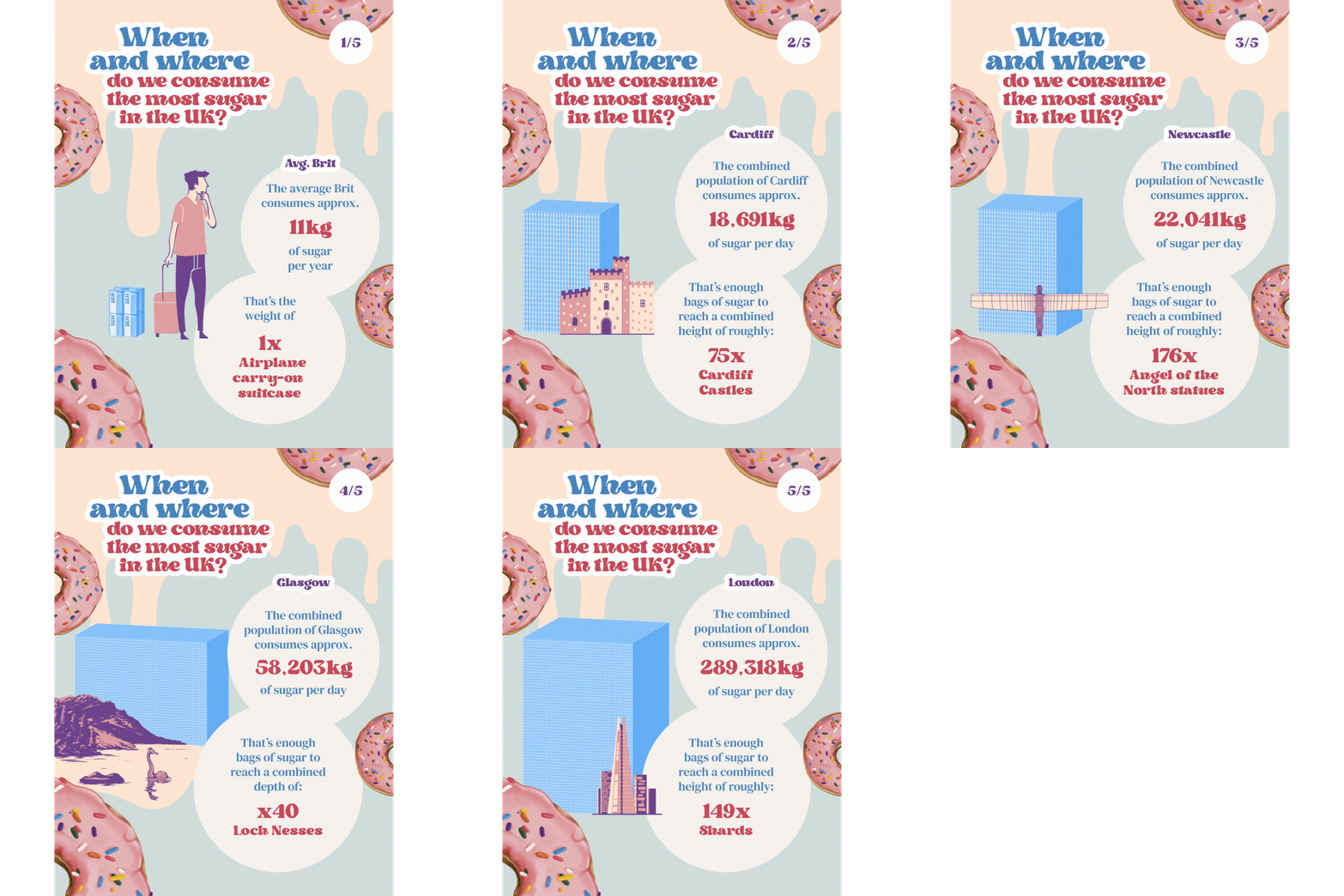
Cardiff tops the list, consuming an average of 38g of sugar per day per person— that’s 27% higher than the NHS maximum daily amount of 30g, for adults. Over a third of Cardiff residents say this has led to weight gain, while 1 in 5 report tooth decay and 16% experience sleep problems linked to sugar intake.
In second place is Glasgow, averaging 34g of sugar per day, followed by Belfast at 33g. At the other end of the scale, Brighton has the lowest sugar consumption in the UK at 23g per day — 21% lower than the national average of 29g.
Seasonal Spikes: How do cravings change throughout the year?
On average, our survey found that most people eat around 29g of sugar, which is in line with the maximum daily amount of 30g.
However, alongside our day-to-day cravings, many people’s sugar intake surges around key events and holidays throughout the year. In fact, 37% of Brits admit to using occasions like Christmas as an excuse to overindulge in sweet things.
On average, people reported consuming over 80g more sugar per day during Christmas - almost 3x the recommended daily maximum. Easter and Halloween are also periods when people eat more sugar, with consumption going up by 65g and 46g, respectively. Other events when sugar intake goes up include Valentine’s Day (37g more), summer picnics and barbecues (42g more) and birthday parties (54g more).
Once again, 16-24-year-olds were the most likely to overeat sugar, especially during the festive season, clocking in at 100g more than their average daily intake at Christmas. And just as they reported more cravings during the rest of the year, women consume more sugar than men at each of these celebrations and events - apart from around Valentine’s Day, when men typically eat more sugar.
Lots of these holidays and celebrations are centred around food, so it makes sense that people’s usual eating habits would change. Additionally, during periods like Christmas and Halloween, there’s no shortage of sweet treats on the shelves, and just seeing these things in the supermarket or on TV ads can contribute to ‘food noise’ and cravings. Holidays can also be a time of stress, so many of us reach for sugar to boost our mood.
Dr Babak Ashrafi has some advice if you’re struggling with overindulging during these periods:
“One of the best ways to cut back on sugar during Halloween and the festive season is to focus on how you eat, not just what you eat. For example, having protein or fibre before sweets slows down how quickly sugar hits your bloodstream, so you don’t get the same spike and crash…”
Misconceptions about sugar
Special occasions aside, do you actually know how much sugar is in your food? Or how much you should be eating?
There are plenty of misconceptions and misunderstandings about sugar, which can lead to people eating more than they should and feeling the negative effects. To understand how much of a problem this could be causing, we wanted to see if there was a difference between what people think about sugar and the reality.
When it comes to children’s sugar consumption for example, there is a clear misunderstanding around allowances. We asked our respondents what they think the NHS recommends as the maximum daily sugar allowance for a child under 10 and over a third of Brits (35%) admit they don’t know and 1 in 10 thought the allowance was between 25g and 50g, with the top of that range being more than double what is actually recommended for children.
What is the maximum amount of sugar we should be eating?
NHS maximum daily free sugar intake recommendations::
- Adults (and children aged 11+): No more than 30g a day (about 7 sugar cubes)
- Children aged 7–10: No more than 24g a day (about 6 sugar cubes)
- Children aged 4–6: No more than 19g a day (about 5 sugar cubes)
- Children aged 2–3: No more than 14g a day (about 3.5 sugar cubes)
- Children aged 1: No more than 10g a day (about 2.5 sugar cubes)
(Source: NHS)
To further highlight other sugar related knowledge gaps and misconceptions, we also asked people how healthy or unhealthy they thought certain foods are to see if people know just how much sugar they’re eating.
Half of Brits consider breakfast cereals to be healthy, and while there are definitely a range of options, many cereals contain added sugar. Similarly, while fruit smoothies are often thought to be a healthy choice - with 56% of our respondents voting them as healthy - they usually contain lots of ‘free sugars’, the average smoothie containing around 10g-13g of sugar per 100ml, meaning a 330ml bottle could contain a hefty 33g-42.9g of sugar, above the maximum allowance in one drink alone!
The NHS says ‘free sugars’ are often the cause behind adults and children in the UK eating too much sugar and experiencing health issues like tooth decay and weight gain. Alongside usual sweet treats, the NHS calls out foods like cereals, flavoured yoghurts and unsweetened fruit juices and smoothies as containing added or ‘free’ sugars.
All this goes to show that there’s a gap between people’s perception of sugar and how much they should have versus their daily eating habits. 1 in 4 people also admit to adding sugar to foods that don’t really need it, which can be another reason people are eating over the recommended amount.
Does Britain have a sugar problem?
With seasonal spikes, daily cravings and misconceptions about how much sugar is in our food, it’s easy to see how people could be eating too much of it. But how bad is the problem?
1 in 5 of our survey respondents feel they are addicted to sugar, suggesting they feel a dependency on it in their daily lives. This is backed up by the fact that 34% of Brits admit they can’t go a day without eating a chocolate bar, and over a third say they’d rather give up alcohol than chocolate. Almost a third of respondents also said they hide sugary snacks so they don’t have to share them, again suggesting a feeling of dependency and unhealthy habits around sugar.
40% of people feel the government should introduce stronger policies to reduce sugar consumption, showing that people recognise there is a problem with the UK’s relationship with sugar.
In terms of what could be done, 1 in 3 people believe that higher taxes on sugary foods would help them reduce their intake, but equally, 1 in 3 disagree and feel it wouldn’t. This shows people are divided about how to deal with the bigger picture of sugar cravings. 34% of people also think that workplaces should take some of the responsibility, saying they should do more to reduce staff sugar consumption, for example, by providing less sugary snacks and food options in the office.
While the government has begun introducing measures to reduce sugar intake, such as the recent HFSS advertising ban, many Britons are already turning to other solutions to manage cravings. Medical interventions like GLP-1 weight loss treatments have been shown to help curb sugar cravings and improve people’s relationship with food — with around 40% of users reporting reduced cravings for sugary snacks. 37% of users above the age of 35 are finding it easier to control portion size and 36% no longer need to snack between meals. The findings show that while the government looks to strengthen its approach to tackling obesity, the public is increasingly seeking practical, science-led solutions to improve their physical health.
The impact of sugar cravings
Sugar cravings and overconsumption come with a range of negative side effects impacting all areas of your health, from your weight to your sex life.

We asked our survey respondents how sugar has affected their well-being, both physical and mental. Dr Babak Ashrafi summarises the findings:
“The survey shows the biggest downside of sugar addiction is weight gain (30%), which isn’t surprising given how easily excess sugar is stored as fat when the body can’t burn it off — making it harder to manage a healthy weight over time. Coming in next is tooth decay (22%), with sugar acting like fuel for mouth bacteria that produce enamel-eroding acids, meaning every sweet snack leaves its mark on your smile. And finally, energy crashes and fatigue (21%) highlight sugar’s rollercoaster effect: it gives a quick high, but that’s quickly followed by a slump that leaves you drained and reaching for the next fix.”
Digging deeper, 3 in 10 have experienced weight gain as a result of sugar on average, increasing to 38% of Gen X and 58% of Baby Boomers. Breaking things down by gender, over a third of women have experienced sugar-related weight gain versus 26% of men. Regionally, we found that Liverpudlians were the most likely to gain weight due to sugar.
Almost a quarter (22%) of British adults have experienced tooth decay because of their sugar intake, with Gen X being the most affected group. Plus, a quarter of Gen Z have trouble sleeping due to sugar, and 27% of Millennials have experienced energy crashes and fatigue because of the sugar they eat. 28% of Brits even report ‘sugar hangovers’ the day after consuming too much, peaking to 45% among Millennials. Those with higher BMI scores are more likely to feel the effects as well, with 44% of those 40+ BMI experiencing sugar hangovers the following day.
Overeating sugar can also impact your emotional well-being. 15% of people said their sugar intake caused a low mood or mental fog. Nearly half of Brits (48%) also said they feel guilty after eating sugar, with 2 in 3 25-34 year olds feeling bad after a sugar binge. Women are also more likely to feel guilty after eating sugar than men. Over a third of Brits also said they get irritable without sugar, with 51% of 35-44 year-olds reporting mood changes when sugar is absent.
We also looked at the impact that sugar had on people’s sex lives, with just under 1 in 10 (9%) saying it negatively impacted their libido. 13% of people said that sugar makes them feel bloated or unattractive, affecting their confidence in the bedroom and reflecting the impact of sugar-related weight gain. 11% of people also said that sugar leaves them feeling too tired for intimacy, lining up with sugar causing sleeping problems or energy crashes.
The data paints a clear picture: sugar impacts not just our physical health, but also our mood, confidence, and energy levels. Yet, even when we recognise the problem, making meaningful changes to our diet can be far from easy. To understand what it really takes to cut back on sugar, and the positive difference it can make, we spoke to Theresa Manion, a 55-year-old hairdresser from North London, about her journey to give it up for good.
Theresa Manion, 55, from North London
“I finally got off the glucose roller coaster — and I’ve never looked back.”
“I wanted to get off the glucose roller coaster. It was making me tired all the time — I’d feel fine one minute, then crash the next. I also wanted to lose weight and just feel like the healthiest version of myself.”
“Saying no to hidden sugars was the hardest part. You think you’re doing well by cutting out sweets, but then you realise things like ketchup, salad dressing and sauces are packed with it too. I had to retrain how I looked at food labels completely.”
“The difference in my energy was almost instant. I stopped craving sugar — and even my evening glass of wine! I realised I’d been chasing sugar highs all day without knowing it. Now my energy is steady, I sleep better, and I don’t rely on sugar or alcohol to ‘pick me up’ anymore.”
“Start small. Don’t focus on cutting everything at once — just start noticing where sugar sneaks in. Once you’re aware, it’s so much easier to make better choices.
Summary
So there you have it, a deep dive into the UK’s relationship with sugar, from cravings to misconceptions.
Aside from the occasional sweet treat, we should all be mindful of how much sugar we’re eating and aim to not exceed the daily recommended amount.
That way, we can stay healthy and avoid the negative impacts of eating too much sugar, like weight gain, which can increase the risk of conditions such as heart disease, type 2 diabetes, and tooth decay.
Dr Babak Ashrafi shares some tips on how people can help curb their sugar addictions and start embracing healthier habits.
Sugar is often hidden in foods under different names like glucose syrup, maltose, or dextrose. Becoming familiar with these terms allows you to spot hidden sugars and avoid products that may be sabotaging your efforts without you realising it.
Soft drinks, energy drinks, and even fruit juices are among the largest sources of added sugar and because they are liquid, the sugar is absorbed quickly into the blood stream, causing spikes and crashes which drive cravings. Switching to water, sparkling water, or unsweetened tea/coffee can make a significant impact.
Protein and fibre help slow digestion and help keep blood sugar stable. Those looking to cut down on sugar should prioritise balanced meals with lean protein and fibre (e.g. chicken and vegetables, or beans and whole grains) to help keep blood sugar steady, provide lasting energy and reduce cravings for quick sugar fixes.
Going completely sugar-free overnight can be difficult and often unsustainable, leading to intense cravings and relapse. A more effective approach is to reduce intake step by step. For example, by putting one less spoon of sugar in your tea or coffee, or choosing smaller portions of desserts, over time, your taste buds adapt, and the desire for sweet foods naturally decreases.
Swap sugary desserts for fresh fruit, when possible, this will allow you to still satisfy the sweet taste, but with the benefit of having fibre and nutrients. Unlike refined sugar, the fibre in fruit slows down sugar absorption, reducing spikes in blood sugar and helping you feel fuller for longer.
Skipping meals can lead to sugar binges later in the day. Eating balanced meals regularly throughout the day helps prevent these energy dips and reduces the likelihood of reaching for high-sugar snacks to compensate.
While artificial sweeteners may reduce calorie intake, the evidence around their long-term effects is mixed, and they can keep the brain conditioned to expect intense sweetness. That makes it harder to truly reset your palate and reduce cravings. A better approach is to gradually lower your overall sweetness threshold by choosing whole foods, fresh fruit, and balanced meals that stabilise energy without relying on either sugar or sweeteners.
If you are struggling with obesity as a result of, or partially due to, over consumption of sugar, Superdrug Online Doctor might be able to help. After a simple online consultation, we’ll help you find the right solution, from lifestyle changes to weight loss treatments.

Medically reviewed by
Dr Babak AshrafiLast reviewed: 24 Oct 2025
Patient Reviews
Related Weight Loss Treatments
Further Reading on Weight Loss
- Do Appetite Suppressants Work?
- BMI Calculator
- Ozempic For Weight Loss
- Weight Loss FAQs
- Weight Loss Injections
- Rybelsus For Weight Loss
- Victoza For Weight Loss
- Semaglutide For Weight Loss
- Comparing Weight Loss Pills
- Comparing Weight Loss Injections
- Weight Loss Injections on the NHS
- Ozempic Face
- How to Switch from Wegovy to Mounjaro
- Tirzepatide vs Semaglutide vs Liraglutide
- Calorie Deficit Calculator
- Weight Loss Plateau: Why It Happens and 8 Ways to Break Through
- Why Am I Not Losing Weight?
- How to Switch from Mounjaro to Wegovy
- Orforglipron: The Oral GLP-1 Pill for Weight Loss
- GLP-1 Patches: Do They Work For Weight Loss?
- GLP-1 Medications for Weight Loss
- How to Tighten Loose Skin After Weight Loss
- How GLP-1 Medications Can Help with PCOS
- Retatrutide: The New Triple-Agonist Weight Loss Treatment
- BMR Calculator
- Semaglutide Tablets
- TDEE Calculator
- Protein Calculator for Weight Loss
- Berberine for Weight Loss
- Mounjaro vs Ozempic